
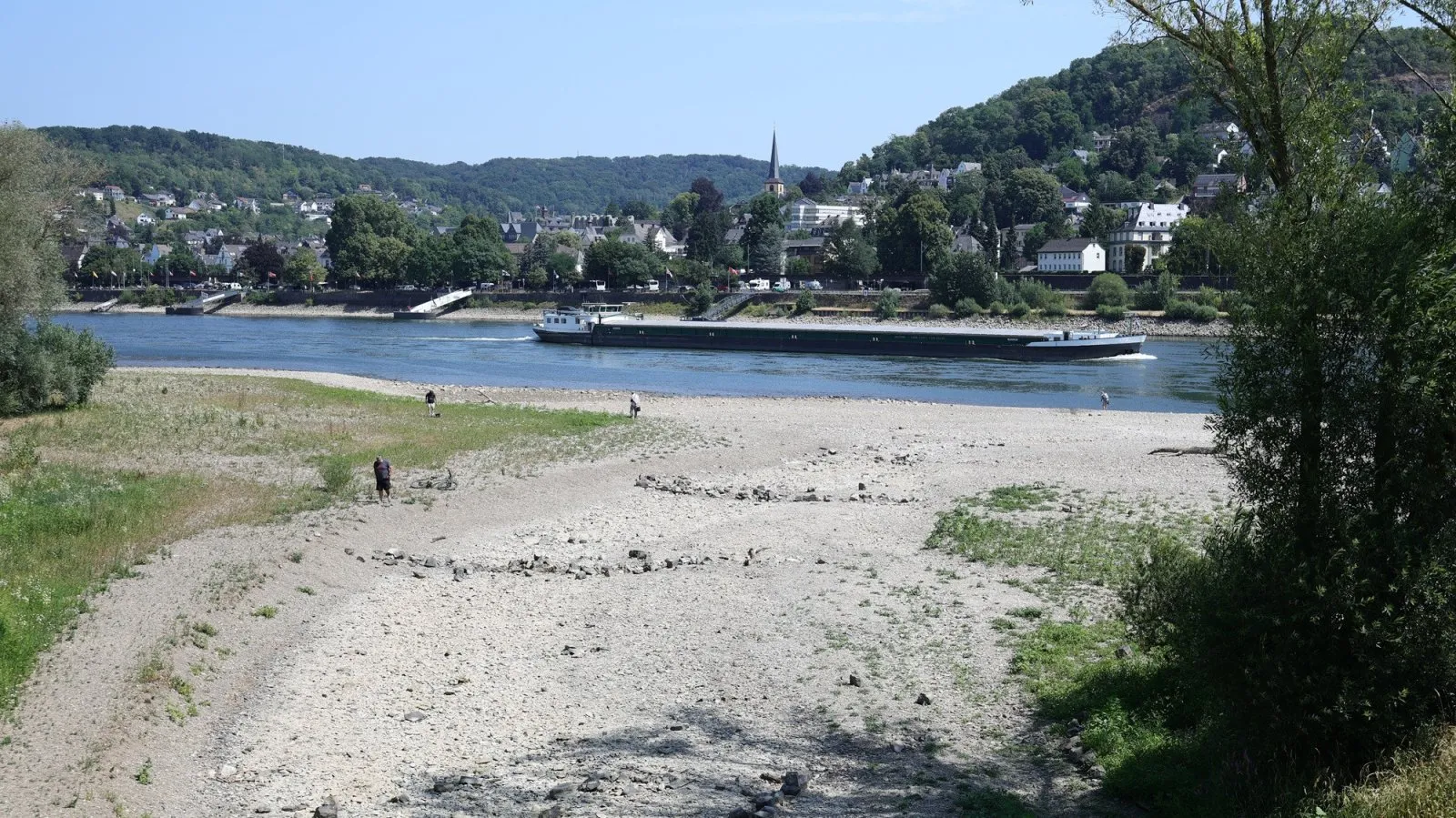
In recent years, Europe has been watching its rivers like a sequence of film frames. In each consecutive frame, the water is a little less.
In 1994, two students at San Francisco State University set up a small webcam pointed at the life outside. Every 20 seconds, it captured a new frame. Fog. An empty sidewalk. People walking by. A section of the university campus. Nothing spectacular, and nothing the world absolutely needed to see. The camera was named FogCam and continued to operate for decades. It didn’t become famous for its image quality or for extraordinary events. Its value lay in something much simpler – it was always there.
In 2019, its creators announced they would shut it down. The news triggered an unexpected wave of sadness and public backlash. The loss was not about a missing old camera, but about losing a simple, constant presence – a small window to a place that continued to exist somewhere, whether anyone was watching it or not. In the end, the university took over its maintenance, and FogCam remained on.
Its story reminds us that not every loss begins with a catastrophe. Sometimes, something simply begins to slowly fade from the landscape. It appears less and less in each subsequent frame, until one day we realize that the world without it already looks different.
Today, Europe is watching its rivers in the exact same way. Only this time, the camera is not pointed at the fog. It is pointed at the water on which the continent’s life depends.
In Each Consecutive Frame, the Water Is a Little Less
Rivers do not disappear all at once. First, boats begin to carry less cargo. Then, the stones at the bottom show up where no one has ever seen them before. After that, the water stops reaching the banks where generations of children grew up. Nuclear power plants shut down. The bridge is still there, but the river beneath it is no longer the same.
At the end of June 2026, the European Drought Observatory reported that conditions remain critical across much of Europe and continue to worsen in the central and western regions of the continent. A prolonged heatwave has gripped Europe, and the deficit of precipitation and soil moisture is gradually turning from a meteorological problem into an economic threat.
This is already visible along the Rhine.
At the Kaub gauge – one of the most critical points for shipping – the water level has reached 42 centimeters. The low water restricts the draft of ships, forcing some of them to carry only a fraction of their usual cargo. For certain vessels and routes, the reduction in cargo capacity has reached up to 80%.
The Rhine is not just an ordinary river passing through beautiful European cities. The Rhine is one of the hidden arteries of the continent’s industrial system. German industry alone relies on it to transport approximately 200 million tons of cargo annually – fuels, chemical products, coal, raw materials, and manufacturing components.
When water levels drop, more vessels, more trips, more fuel, and more time are required. Part of the cargo is rerouted to rail and road transport, which is more expensive and often already overburdened.
Thus, the drought does not remain on the riverbank. It enters the factories, the warehouses, the power plants, and ultimately – the price that the ordinary person pays!
For example, Thyssenkrupp Steel was forced by low water levels in July to curtail production in its blast furnaces due to disrupted raw material deliveries, and to suspend its own barge shipping operations.
The Danube Is Also Beginning to Recede
Naturally, the same story is unfolding along the Danube. In Budapest, the river level has come within just eight centimeters of its historic minimum. Cruise ships are left stranded in ports, some tourist trips have been canceled, and one operator reported an 18% drop in bookings in July due to canceled routes.
More alarmingly, as the Danube enters Romania, a flow rate of 1,750 cubic meters per second was recorded – the lowest level in the last 30 years. The forecast indicated that it would continue to decline to around 1,700 cubic meters per second.
In the Călărași–Cernavodă sector, restrictions on the use of water for irrigation have already been introduced. Romanian authorities are taking joint actions to maintain the minimum required water volumes, including guaranteeing nuclear power generation.
Once again, water shows that the sectors we are used to viewing separately are actually parts of a single system.
Agriculture needs irrigation. Energy needs cooling, water volumes, and transport. Industry needs raw materials and uninterrupted supplies. Cities need drinking water. Ecosystems need a minimum natural flow to stay alive.
When the level of a strategically vital river begins to fall, everyone starts fighting for the very same drop of water.
What This Means for Bulgaria
In Bulgaria, we often perceive major European processes as something happening far away from us. But the Danube is not a foreign river. It is our border, a transport corridor, a source of water, an ecosystem, and a component of the economic security of all of Northern Bulgaria.
On July 17, it was reported that Hungarian and Romanian institutions recorded record-low levels, and the river’s flow rate reached its lowest point in the last 30 years. At the time of publication, official information regarding the status of our sector is still lacking from the Bulgarian side. But the lack of information on our side does not mean a lack of risk.
Water does not comply with national borders and administrative responsibilities. Everything that happens in the watershed upstream – rainfall, drought, consumption, dams, and industrial needs – inevitably reaches us too.
But the Danube is only the most visible part of the problem. Small Bulgarian rivers are disappearing much more quietly, without public attention. Villages and fields are left without water, people are losing their livelihoods, while large cities continue to draw precious resources undisturbed.
Small rivers do not have international commissions, major ports, or market analysts tracking their levels daily. When a small river recedes, local people notice it first. Then the farmers. After that, wells begin to recover more slowly, the soil dries deeper, and settlements enter the summer with increasingly smaller reserves.
By the time the problem reaches the national news, the natural system has often already lost a significant portion of its resilience.
Water Deficit Turns into an Energy Deficit
When rivers become too shallow, the energy and transport system begins to resemble a continuously narrowing funnel. High fuel prices, geopolitical tensions, and strained domestic logistics amplify one another. The drought simultaneously reduces hydropower generation, hinders the cooling of some nuclear power plants in Europe, and increases electricity consumption for cooling homes, offices, and industrial premises.
Thus, the water crisis gradually turns into an energy crisis. The energy crisis raises production costs. And production costs reach food, transport, and daily life. This is the exact same crisis, viewed from different angles.
We Cannot Wait for the Last Frame
Bright Hydro Future operates with the understanding that water security cannot depend on a single river, a single dam, or an unusually wet year. There is no single facility that can solve the water crisis on its own. A system of mutually reinforcing solutions is required.
For coastal areas, this means developing new, independent water sources through modular seawater desalination powered by renewable energy. Desalination should not replace rivers and groundwater. Its role is to relieve pressure on them and provide a strategic reserve for the population, agriculture, and industry.
For settlements, this means regional buffer reservoirs and restoring our capacity to store water. Water that is available during wetter months should not simply flow through our territory and disappear if it can be safely stored for periods of deficit.
For the economy, this means reusing treated wastewater, reducing network losses, constantly monitoring water resources and infrastructure, and designing according to future conditions rather than the climate of the last century.
For the energy sector, this means combining water projects with solar energy, storage systems, and green hydrogen production. Water and energy security must not be planned as separate policies, because each determines the sustainability of the other.
Above all, we must begin before the state of emergency. Before water and energy rationing. Before the wells run dry. Before farmers are forced to choose which crops they can save. Before water turns from a public resource into a cause for conflict between cities, industries, and entire regions.
FogCam continues to operate today because people reacted before its last frame was captured.
European rivers will not be saved by our nostalgia after they are gone.
But the next frame has not been captured yet.
And it still depends on us how much water will be in it.
It depends on every single one of us how much public weight we lend to the cause of Bright Hydro Future for creating a Brighter Future for all!
FogCam: https://www.fogcam.org/
Picture: Andreas Rentz/Getty Images